How Nano Banana Fits Into the Evolving Landscape of AI Image Generation
@nanobananawire
I have been following the explosion of AI image generators for a few years now, ever since the first GAN-based tools started producing blurry but fascinating faces. Back then, getting a usable image meant wrestling with latent space vectors and hoping the neural network would cooperate. Today, the field has matured into something far more accessible. Tools like Stable Diffusion, DALL-E, and Midjourney have turned text-to-image generation into a mainstream creative outlet. Recently, I spent some time with a platform called Nano Banana, and it made me think about how far we have come and where we might be headed.
Nano Banana is an AI image generator that helps users turn ideas into visual content through guided prompts and model selection. That description alone sets it apart from the more open-ended systems I have used before. Most generators drop you into a blank canvas with a single text box and expect you to know exactly what to type. Prompt engineering becomes a separate skill you have to learn, often through trial and error. Nano Banana takes a different approach. It guides the process, which I found especially useful when I was not sure how to articulate my vision in the right terms.
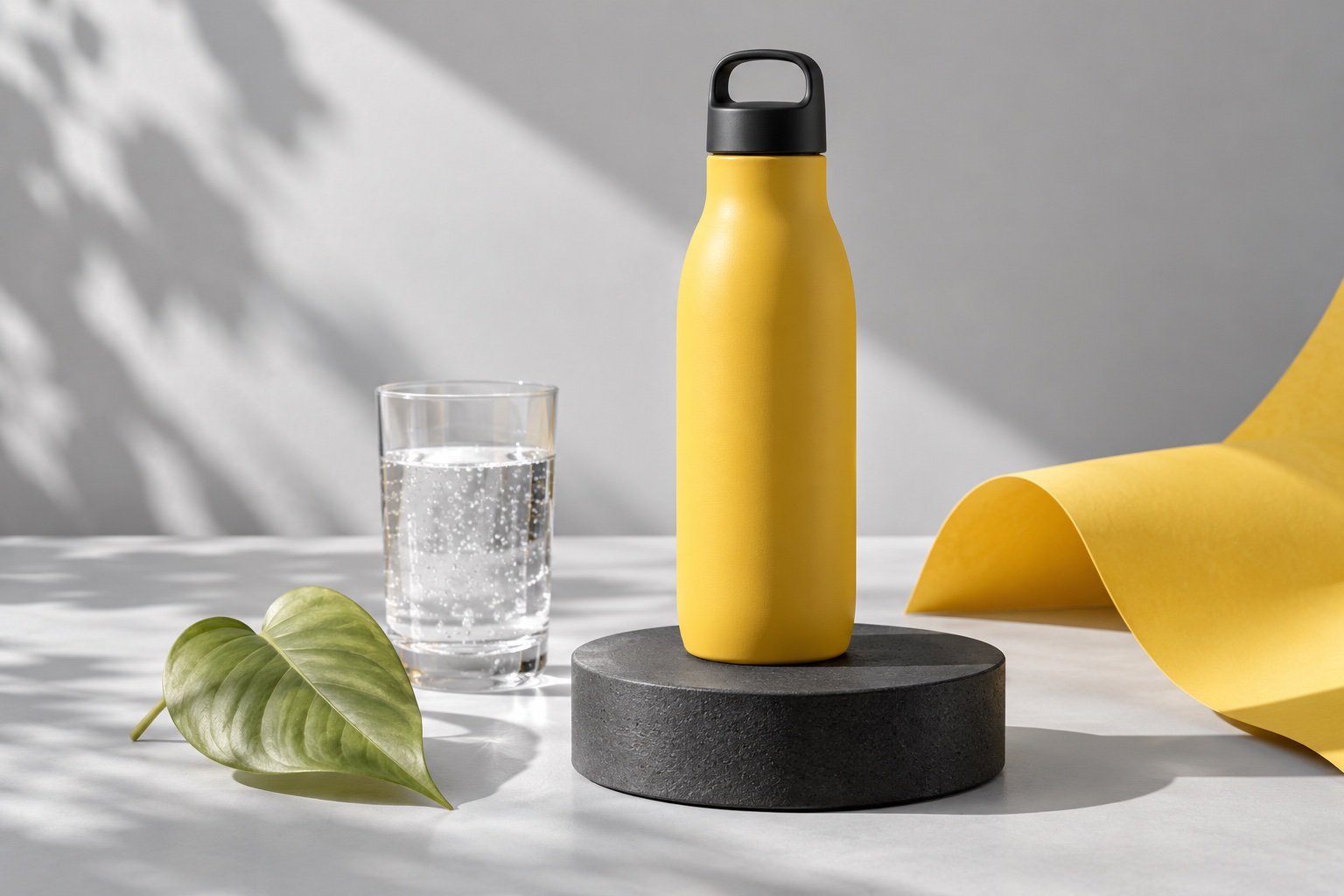
My first test was straightforward. I wanted to generate a concept image for a small branding project. I opened Nano Banana and started with a rough idea, something about a minimalist workspace with natural light. The platform asked me to select a model from its list, which included options tuned for different styles. I chose one that leaned toward clean, realistic rendering. After a few rounds of adjusting the prompt and tweaking the model selection, the results felt much closer to what I had in mind than what I typically get from a raw Stable Diffusion run. The guided interaction saved me time, and it reduced the number of iterations I needed to reach a usable output.
Why Guided Prompting Matters
When I first started working with AI art, I assumed the hardest part would be the technical setup. Installing diffusion models locally, managing dependencies, and figuring out CLIP embeddings all took effort. But the real bottleneck turned out to be prompt engineering. A vague prompt like "a cat on a couch" gives you a dozen different interpretations, most of them mediocre. Getting something specific requires understanding how the model weights certain words, how a diffusion model interprets negation, and how to position your subject in latent space. Nano Banana simplifies that by offering structured guidance. Instead of staring at a blank text field, you get prompts and model suggestions that help you narrow down your intent.
This approach feels especially relevant for people who are not machine learning engineers. I have watched friends in graphic design struggle with DALL-E because they expected it to read their minds. They would type "a blue chair" and wonder why the result looked nothing like the chair in their head. The problem is not the model; it is the gap between human intuition and the statistical patterns the model learned. Nano Banana tries to close that gap by making the prompt generation process more interactive. You are not just throwing words at a black box. You are selecting parameters that the platform translates into a more precise query for the underlying image synthesis engine.
Comparing Approaches: Midjourney, Leonardo.ai, and Adobe Firefly
Every major text-to-image tool has its own philosophy. Midjourney relies heavily on a community-driven Discord server and a very particular aesthetic that leans toward the painterly and dramatic. It excels at creating images that look like finished art, but it can be hard to steer it toward a specific commercial style. Leonardo.ai offers a lot of control over model versions and fine-tuning, but that level of detail can overwhelm new users. Adobe Firefly integrates into a professional workflow and benefits from Adobe's existing design ecosystem, but it feels constrained by the same corporate guardrails that make it safe for licensing. Canva has also jumped into AI image generation, embedding it directly into a template-based design tool. That makes it easy for anyone to add visuals quickly, but the creative range is narrower.
Nano Banana sits somewhere in the middle. It does not assume you are a professional artist, but it also does not treat you like a complete beginner who only wants one-click templates. The model selection feature lets you choose a style direction without needing to understand the underlying diffusion model architecture. You can switch between options that prioritize photorealism, illustration, or abstract composition. That kind of flexibility matters when you are working on a project that demands visual consistency across multiple outputs.
Practical Uses Beyond Experimentation
I have been using AI image generators for client work for about two years. My typical use case is concept visualization, generating mood boards and style references before the actual design work begins. For that purpose, tools like Runway ML and Stable Diffusion have been invaluable. But they require a certain level of patience. You have to generate dozens of images, cherry-pick the ones that work, and then refine from there. Nano Banana streamlined that process for me. The guided prompts helped me articulate visual ideas I had not fully formed in my own head. That might sound like a minor advantage, but in a fast-moving project, saving a few iterations per image can mean the difference between meeting a deadline and scrambling.
Another area where I see potential is in education. I have taught short workshops on AI art and AIGC concepts. One of the hardest parts is explaining latent space and how a neural network "sees" images. Tools that give immediate, controllable feedback make those concepts tangible. With Nano Banana, a student can see how changing a single prompt word shifts the output, and how selecting a different model changes the style. That hands-on understanding is more effective than any diagram of a diffusion model's architecture.
The Underlying Technology
Under the hood, most of these generators rely on similar foundations. Stable Diffusion uses a latent diffusion model trained on a massive dataset of images and text. OpenAI's DALL-E uses a transformer-based approach that maps text embeddings directly to image features. Midjourney is built on a proprietary version of a diffusion model, and Adobe Firefly also uses a diffusion model trained on licensed content. Nano Banana, from what I can tell, integrates one or more of these backends and wraps them in a more guided user interface. The platform likely relies on CLIP for understanding the relationship between text prompts and image content, similar to how VQGAN worked in earlier iterations of generative art.
The choice of backend model matters because each one has trade-offs. Some models handle faces better. Others produce more coherent compositions. Some are better at interpreting abstract concepts. A tool that lets you switch between models without changing your workflow is genuinely useful. I remember spending hours trying to get a specific style out of a single model, only to realize a different architecture would have handled it in one generation. Nano Banana's model selection feature addresses exactly that frustration.
Prompt engineering, in my experience, is still the most underrated skill in AI art. Knowing how to structure a prompt, which keywords carry weight, and how to avoid common pitfalls like over-saturation or anatomical errors takes practice. Platforms that help users learn that skill, rather than hiding it, will produce better results. Nano Banana's guided approach does not eliminate the need for prompt engineering, but it makes the learning curve gentler.
Trade-offs and Limitations
No tool is perfect. The guided interface that makes Nano Banana accessible also imposes constraints. If you are an advanced user who has already mastered prompt engineering and knows exactly which diffusion model parameters to tweak, you might find the guidance limiting. Sometimes you want raw access to the latent space without any guardrails. For those situations, a direct Stable Diffusion installation or a platform like Runway ML gives you more control. But for the majority of users who fall somewhere between curious beginner and experienced practitioner, the structure is an asset, not a limitation.
Another consideration is the size of the generated images and the platform's server capacity. Like most cloud-based generators, Nano Banana depends on remote inference. That means your results depend on server load and network latency. In busy periods, generation times can stretch. That is not unique to Nano Banana; every major service from Midjourney to Leonardo.ai faces the same issue. But it is worth keeping in mind if you plan to use it for time-sensitive work.
Where Things Are Heading
The AI image generation space is moving fast. Style transfer, which once required separate models and manual parameter tuning, is now baked into most generators as a preset. Text-to-image generation has improved to the point where generated images can pass for photographs in many contexts. The next wave will likely focus on better control, more consistent outputs, and tighter integration with other creative tools. I expect to see more platforms adopt the guided approach that Nano Banana uses, because it reduces friction for new users without sacrificing quality for experienced ones.
I have been using the platform for a few weeks now, and I keep coming back to it for projects where I need a quick visual direction without the overhead of a full design tool. It fills a specific niche between raw generation engines and full design suites like Canva. The phrase "nano banana" appears in my workflow notes more often than I expected, simply because the tool delivers consistent results with less back-and-forth. If you are curious about AI image generation but have been put off by the complexity of prompt engineering or the learning curve of diffusion models, it is worth a try. You might find that the guided experience makes the difference between frustration and creative flow.